
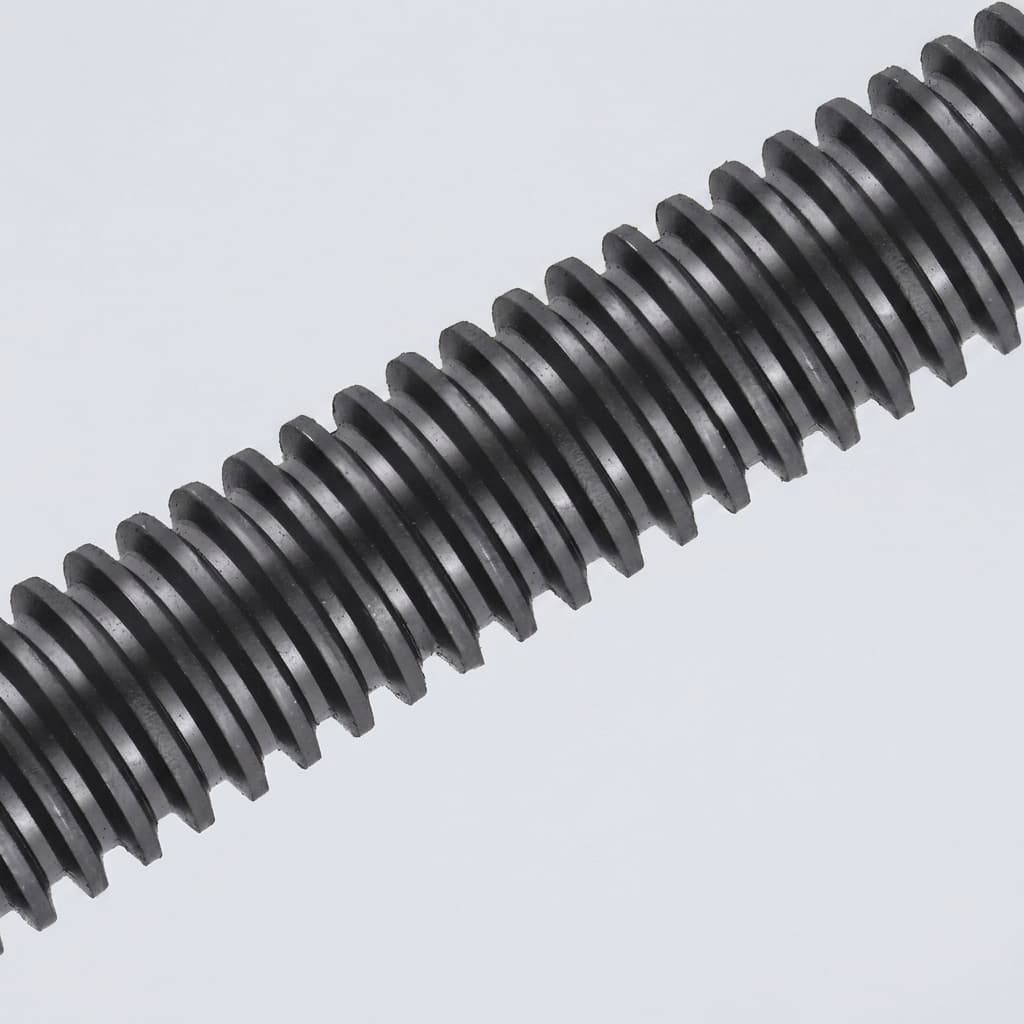
Planetary Roller Screw vs. Ball Screw: Which to Choose for High-Load Actuators?
An engineering and buyer's guide comparing planetary roller screws and ball screws. Includes load capacity data, Hertzian contact mechanics, and TCO analysis.
When specifying a linear actuator for high-load, high-duty-cycle industrial motion, mechanical engineers and sourcing managers frequently face a core architectural choice: Planetary Roller Screw or Ball Screw.
While ball screws remain the default choice for general factory automation due to their low cost and high availability, planetary roller screws dominate when the application pushes the extreme limits of load density, shock resistance, and longevity.
Below is a breakdown of the physical differences, practical constraints, and commercial considerations from an OEM buyer's perspective to help you make an informed sourcing decision.
1. The Physics of Contact: Point vs. Line
The fundamental difference between these two technologies lies in the contact mechanics between the nut and the screw shaft.
Contact Stress Mechanics: Point vs. Line Contact
- Ball Screws (Point Contact): A ball screw relies on recirculating steel balls. The contact between a spherical ball and the concave thread raceway is essentially a point. Under heavy loads, this point contact experiences massive Hertzian stress concentration. If overloaded, the balls can deform plastically or indent the raceway (brinelling).
- Planetary Roller Screws (Line Contact): A roller screw utilizes threaded rollers that orbit the main shaft. The contact interface is a continuous line along the flanks of the threads. This massively increases the surface area over which the load is distributed.
The Engineering Result: A planetary roller screw can provide up to 15 times the dynamic load capacity (C) and static load capacity (C0) of a ball screw of the exact same outer diameter. If your envelope is strictly constrained (e.g., you only have room for a 15mm diameter screw) but your thrust requirements are immense (e.g., >20kN), the roller screw is often the only physics-based solution.
2. Lifespan, Wear, and Duty Cycle
Because of the increased contact area, roller screws distribute wear much more evenly. The standard calculation for expected life ($L_10$ life) scales exponentially with dynamic load capacity.
In high-frequency oscillation applications (like servo presses, riveting guns, or medical dispensing pumps), ball screws frequently fail prematurely. Short strokes prevent the balls from completing a full recirculation circuit, causing localized lubricant starvation and rapid localized wear.
Planetary roller screws do not suffer from recirculation jamming in their standard planetary design. All rollers remain in constant engagement and orbit the shaft continuously. As a result, their expected travel life is typically up to 15 times longer than an equivalent ball screw. This dramatically reduces the Total Cost of Ownership (TCO) in 24/7 manufacturing environments by minimizing machine downtime.
3. Shock Load Resistance and Harsh Environments
If your actuator will be subjected to impact forces—such as spot welding guns clamping down, or humanoid robot feet striking the ground—the point-contact nature of a ball screw makes it highly vulnerable to catastrophic failure. A single severe shock load can shatter a ball or severely pit the raceway, rendering the screw useless.
The solid-threaded rollers in a planetary roller screw can absorb massive shock loads without deforming. Roller screws also clear debris more effectively. If a small particulate enters a ball screw, it can jam the recirculation tube. The wiping action of a planetary roller screw naturally pushes contaminants out of the thread path.
The TCO Reality: Justifying the Premium
Procurement teams often balk at the initial price of a roller screw (typically 3x to 5x higher than a ball screw). However, evaluating the Total Cost of Ownership (TCO) changes the math entirely for heavy-duty applications.
Consider an automotive servo press operating 24/7.
-
A $1,000 ball screw fails every 6 months due to fatigue.
-
Replacing it requires 4 hours of machine downtime at a factory cost of $10,000 per hour.
-
Annual cost of ball screw approach: $2,000 (parts) + $80,000 (downtime) = $82,000.
-
A $4,000 roller screw lasts 5 years before requiring replacement.
-
Annualized cost of roller screw approach: $800 (parts) + $8,000 (downtime/5) = $2,400.
For high-duty-cycle OEMs, the roller screw pays for itself in less than a single maintenance cycle.
Sourcing Decision Matrix: Commercial and Technical
For procurement teams, the decision isn't just about physics; it's about cost, supply chain stability, and integration.
| Metric | Precision Ball Screw | Planetary Roller Screw |
|---|---|---|
| Relative Initial Cost | 1x (Baseline) | 3x - 5x |
| Lead Time | Generally COTS (Off-the-shelf) | Often Make-to-Order (6-12 weeks) |
| Dynamic Load Capacity | Moderate | Extreme (up to 15x higher) |
| Expected Lifespan | Moderate | Up to 15x longer |
| Shock Resistance | Poor (High risk of brinelling) | Excellent |
| Max Speed limits | Limited by ball return mechanism | Very High (no recirculation limits) |
Material Grades
- Ball Screws are typically made from standard bearing steels (like SCM415 or 52100).
- Roller Screws for extreme environments are often machined from premium grades like high-carbon chromium steel (100Cr6) hardened to HRC 58-62, or specialized martensitic stainless steels (e.g., 440C or Custom 465) for aerospace and medical applications.
Summary: When to Upgrade
Do not over-engineer. If your application involves light-to-moderate loads, smooth motion, and generous space constraints, a standard precision ball screw is highly cost-effective and perfectly adequate.
However, you should immediately short-list a Planetary Roller Screw if you have severe space constraints, high shock loads, or critical downtime costs.
Need help sizing a custom micro roller screw for your next high-load actuator project? Contact our engineering team with your stroke, thrust, and space requirements for a rapid technical review.
Author

Categories
More Posts
Miniature Linear Actuators in Humanoid Robotics: The Role of Micro Roller Screws
Where micro planetary roller screws can fit when humanoid robotics teams need compact, high-load linear actuation.
Sourcing Micro Planetary Roller Screws for Electromechanical Actuators (EMA)
A comprehensive guide for engineers and procurement teams on specifying, sizing, and sourcing micro roller screws for high-load, continuous-duty EMAs.
Dynamic Load Ratings in Micro Roller Screws: How Procurement Can Avoid Over-Engineering
Use dynamic load ratings in micro roller screws to size L10 life, audit supplier data, and avoid costly over-specification in compact actuator RFQs globally.